One of the things I’m most proud of about the church in which I grew up is that we made our participation in God’s mission to the world the front and center of everything we talked about, prayed about, gave money to. God’s mission shaped how we discipled each other.
Many times a year, in a wide array of church settings, we were presented with a stark picture of a lost world living in hopelessness —the hopelessness of not knowing how much God loved them. We were taught that the mission to reach them was urgent, so there was no time to lose.
In that context, God drew me toward international missions. I always found myself befriending the foreign exchange student, trying the newest ethnic restaurant, excited to learn Spanish in school. By the time I was a young adult, I yearned to travel the world, but not merely as a tourist. I wanted to put down roots in another country, live alongside the people there and experience life the way they did, while doing my part for God’s global mission.
The problem was, my only real skill at the time was in writing. I saw no connection between storytelling and the picture I had of missionaries – people who were preachers, teachers and healers. So I became a journalist. (You know, close enough. LOL.)
In my early 30s, God opened the most miraculous door for my husband and me to embark on a career as missionaries. And my assignment was to help believers tell their stories of how God was working in and through local churches around the world. It was a dream come true. I could serve God and the church internationally with my passion and what I was good at
I threw myself into it wholeheartedly. I had never loved doing anything so much. I couldn’t imagine myself ever doing anything else. My whole identity was defined by my work as a storytelling missionary.
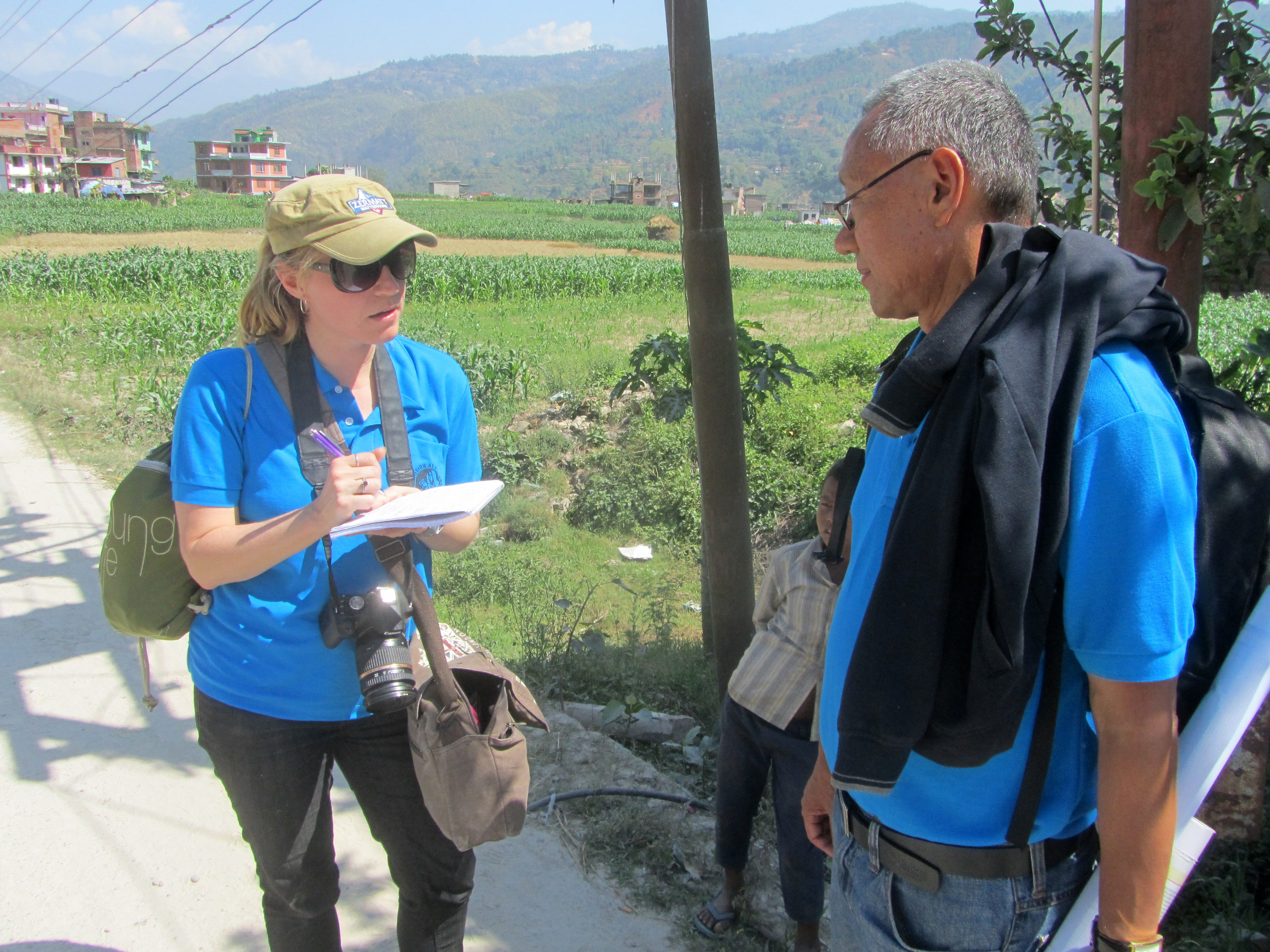
Nearly 10 years later, that dream faded into the harsh reality of burnout, weariness, disappointment, self-doubt, and disillusionment. In a state of exhaustion, my husband and I resigned and returned home.
Shortly after we returned Stateside, the pandemic hit; there was nothing to do, nowhere to go, not even to church. I didn’t know who I was anymore. If I’m not a missionary, who am I?
With great patience and kindness, God revealed to me the root of my burnout: From my earliest childhood, I had viewed who God is and what he wants from me through the lens of my American culture — a predominantly transactional culture that prizes productivity and only values people who are productive. I had come to see God as my boss and myself as His employee.
I believed the reason God created me — that my purpose for existing — was to labor with God in His mission to the world.
As a result, I viewed God’s mission as always more important to God than I was. The mission always came first. Whenever I was tired or disappointed or struggling, I pushed myself to the side to continue carrying out the urgent mission.
I was Martha.
One day I sensed Him say: You got the cart before the horse. You are far more important to me than the work you are doing for me. Yes, all those lost people matter to me deeply. But just because you are already found does not mean you matter any less.
Next, he said: Stop doing things for me. I want to give you a time of rest in me. It’s time for you to receive. Just sit here and let me love you.
He wanted me to put a pause on being Martha so I could simply be with him, like her sister Mary.
Over the years, I had spent plenty of disciplined time reading the Bible, praying and being involved in church programs and outreaches. But I engaged in them as tasks on my to-do list, under the pressure of an always ticking clock.
I was so busy doing things for God that I viewed God and the church as a fast-food drive-through. I would distractedly drive up to the window and receive a greasy sack of processed food. I would shove it down as quickly as I could with one hand while driving on to the next task for God with the other, not really tasting it or receiving any nourishment.

But while going through lockdown in my parents’ basement, I read Mark 12:30-31 in a completely new way: 30 Love the Lord your God with all your heart and with all your soul and with all your mind and with all your strength.’ 31 The second is this: ‘Love your neighbor as yourself.’ There is no commandment greater than these.”
The Holy Spirit gave me a new interpretation: This is not a prescription to be more effective in laboring with God. It’s a description of my purpose for being. I had asked the question: Who am I? What am I here for? And here was the answer: God’s purpose for my life is nothing more than to allow myself to be enfolded in the intimate love of God, to enjoy being loved by He who IS love.
That’s it. Full stop. As an overflow or byproduct of experiencing God’s deep love for me, I can’t help but love him back. That love will swell and swell until it overflows around me onto all my neighbors.
The Bible never paints pictures of the kingdom or God’s love as a hastily assembled burger and some limp, greasy fries. We are repeatedly treated to imagery of a lavish feast.

In Jesus’ time and culture, feasts could go on for days. People sat and talked and spent time with each other over high quality, homemade food and wine, eating slowly, savoring, being nourished in both body and soul. In Jesus’ time, often guests didn’t even sit at the table on chairs. They reclined — an image of resting.

The pictures we see in the Bible of meals were centered on growing relationships rather than finding a shortcut to the energy required for working harder and longer.
In his book, Beholding, Strahan Coleman described the lies I had unconsciously believed with words I had never found to articulate them for myself:
He wrote:
We are constantly being consumed as products … We come to assume that what God wants out of our time together is also productivity. Because if everyone around us, including organizations and even churches, use us for the value we add to them, and this is the way our entire world is structured, without serious consideration we’ll make God in that same image. …. We will come to expect God to equate our value with the measure of our spiritual performance.
In that hubris, it doesn’t even cross our minds that sitting with God and allowing him to behold us could ever be a desire of his heart. And yet, God takes real and deep pleasure in us.
Yes, we work for and with God, but always as the secondary context to our holy friendship.
It has finally become obvious to me: If the creation story in Genesis is about God creating humans for companionship with Him, a companionship that we walked away from, it logically follows that God Himself didn’t die the most excruciating death a human could endure so I could be His employee and work really hard for Him. In an employer/employee relationship, generally, if you lose one employee, you can just hire another. Workers are interchangeable. But for the sake of a precious, irreplaceable, intimate relationship, someone might sacrifice their very life.
Jesus didn’t die to hire me. He died to give me rest from the striving so we can be together, intimately. In His sacrifice, He closed the distance between us so that I can receive all the lavish love He longs to pour out on me.
In his second book, Thirsting, Coleman continues this line of thought when he writes:
God doesn’t need us …God wants us. We exist to receive his passionate love and God thirsts for us to long for him in return (p. 58).
I had misunderstood the whole direction of God’s kingdom and our relationship. I had inverted it. I thought that God’s sacrifice on the cross was so that I could be free from sin to serve Him and work for Him by serving others. Every day, I was living in a kind of famine of trying to feed others out of my starvation. I never stopped to simply receive from God. I didn’t even know He wanted that. I thought He wanted me to keep working harder and longer because time is slipping away and people are dying who don’t know the love of Jesus. The pressure was crushing.
That is not God or His kingdom at all.
God was so kind in bringing all that striving to a screeching halt so that I could sit at His feet and rest. In this quiet space, He has been teaching me the true direction in which His kingdom flows.
First God Himself prepares a bountiful table for us. He invites us to sit down with Him and feast slowly on His abundant love. Next, out of the rich nourishment we receive from our friendship with God, we are filled to overflowing. We receive more than we can possibly digest. There is just too much. So naturally, without effort, we offer from this table of abundance to everyone and everything around us. We find that we have more life and love and power to share than we could ever pour out by our will alone. When we pass on all that we have taken the time to receive ourselves, it is not exhausting, draining or emptying.
It’s exhilarating.
I’ll conclude with more of Coleman’s words from Thirsting:
Why not pause for a moment to sit with the gravity of this. You were made from and for desire. You are not an accidental child, a servant or even a subject. You’re the object of God’s impenetrable affections made to be enjoyed and to enjoy him forever.
Let us feast.